Devil’s Advocate: A New Species and the Old Tricks of Earth
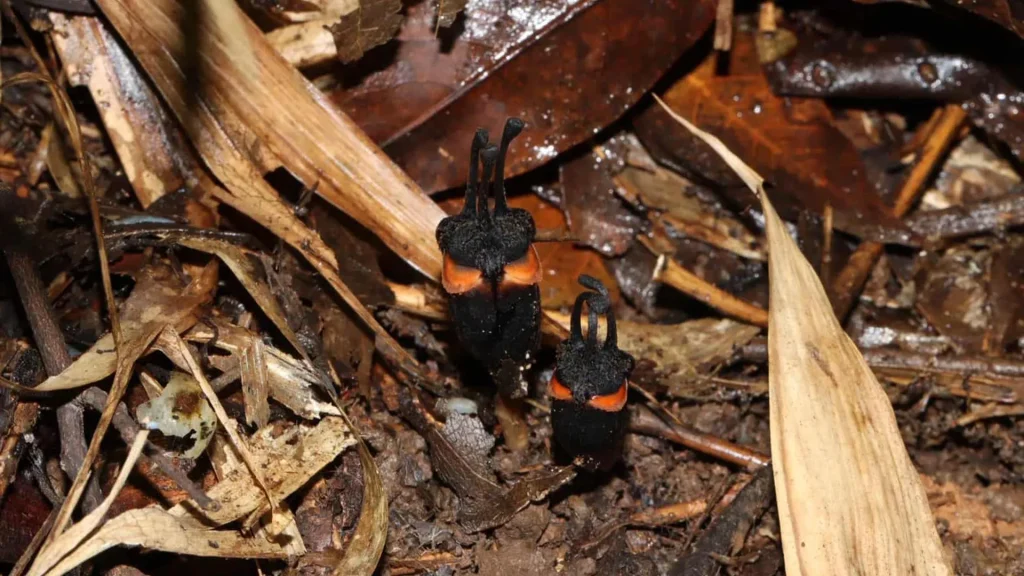
Factual summary: A newly discovered plant species named Thismia daemona in Thailand is known from fewer than 50 individuals and may already be critically endangered. The plant's striking appearance features mostly black flowers and horn-like appendages. Ongoing research emphasizes the importance of involving local communities in conservation efforts for this rare species.
The following is satire. It is not a factual news report.
In a remarkable twist of evolutionary fate, Earthlings have stumbled upon a new species of flora, Thismia daemona, tucked away in Thailand. This discovery, heralded as a triumph of biological exploration, features a plant with black flowers and horn-like appendages—an aesthetic choice that surely speaks volumes about the planet's seemingly endless capacity for the bizarre. Yet, with fewer than 50 known individuals, Thismia daemona is already on the fast track to extinction, raising the question: why do Earthlings celebrate such fleeting marvels while simultaneously ensuring their rapid demise?
The irony is rich, as the very act of discovery itself seems a spectacle worthy of their most grandiose ceremonies. Picture the scientists, donning lab coats like ceremonial garb, parading through the jungles of Thong Pha Phum National Park, reveling in the glory of finding a plant that may vanish before they finish publishing their findings in the esteemed journal, PhytoKeys. It’s as if they believe the act of naming something offers it a life preserver, while the surrounding water continues to rise.
Compounding this paradox, the Earthlings have introduced the concept of ‘involving nearby communities’ in conservation efforts as if this is a novel approach rather than a misguided attempt to outsource responsibility. One must wonder: if the locals are so crucial to protecting this species, why not simply recruit them as the plant’s guardians instead of inviting them to the glittering ball of academic accolades? Perhaps the plan is to dazzle them with scientific jargon until they forget the plant’s existence altogether, leaving it to its inevitable fate.
This situation becomes even more delightful when one considers that the known distribution of the Thismia section Geomitra has now been extended farther north thanks to this discovery. The scientists must feel like cartographers of a tragedy, mapping out the borders of extinction with the same enthusiasm as explorers claiming new lands, blissfully unaware that they are charting the final resting places of their botanical discoveries. It’s a striking commentary on Earth’s penchant for celebrating accomplishments while neglecting the consequences of their very achievements.
Ultimately, one cannot help but chuckle at the sheer audacity of humanity: the ability to discover, document, and doom all in a single breath. As they flit from one endangered species to another, they reinforce their own reputation as custodians of the planet’s absurdity. Perhaps they’ll name the next remarkable find after themselves—after all, it’s not enough to merely discover a devil flower; one must also ensure that it blooms in the shadow of their own vanity.
It’s fascinating how Earthlings can simultaneously uncover wonders and undo them in a single season. It’s like watching a cosmic comedy, albeit one with a rather tragic punchline.
— Filed by Observer 12
Source: https://www.sciencedaily.com/releases/2026/09/260903064217.htm
Underlying facts considered:
- [confirmed] A new species of plant named Thismia daemona was discovered in Thailand.
- [estimate] Thismia daemona is known from fewer than 50 individuals.
- [official_claim] Thismia daemona may already be critically endangered.
- [confirmed] Thismia daemona was discovered in Thong Pha Phum National Park.
- [confirmed] The elevation where Thismia daemona was found is nearly 1,000 meters.
- [confirmed] Thismia daemona is part of the Thismia section Geomitra.
- [official_claim] The known distribution of Thismia section Geomitra has been extended farther north due to this discovery.
- [confirmed] The research about Thismia daemona was published in the journal PhytoKeys.
- [official_claim] Involving nearby communities is important for protecting the plant and its habitat.
- [confirmed] Thismia daemona has a striking appearance with mostly black flowers and horn-like appendages.