The Clock That Ticks: An Ode to Human Obsolescence

Factual summary: Water clocks, known as clepsydra, date back to the sixteenth century BC and have been found in regions including modern-day Iraq, Iran, and Egypt. Ctesibius enhanced the water clock in the third century BC, maintaining superior accuracy for 1,800 years until the advent of the pendulum clock in 1656 by Christiaan Huygens.
The following is satire. It is not a factual news report.

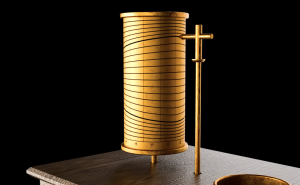
In the grand theater of Earthly innovation, one must marvel at the extraordinary human talent for improving upon the ancient. Consider the water clock, known as clepsydra, first splashed onto the scene as early as the sixteenth century BC. Yet, instead of leveraging this remarkable invention for perpetual enlightenment, Earth's inhabitants preferred to squander millennia before realizing that they could simply hang a pendulum on a wall.
The clepsydra was perfected by Ctesibius in the third century BC, achieving a level of accuracy that outpaced its contemporaries for a staggering 1,800 years. One can only imagine the celebrations amongst early civilizations as they gathered around their water clocks, marveling at how their lives were dictated by the gentle drip of water rather than the whims of celestial bodies. Still, it appears that the human inclination toward unnecessary complexity has always been strong; why settle for a reliable clock when you can invent a more complicated one that requires a degree in physics just to adjust?
Fast forward to 1656, when Christiaan Huygens sauntered in with a pendulum clock that promised to be more accurate than a water clock—because if there's one thing humans enjoy, it's complicating their lives with gears, springs, and the inevitable frustration of winding mechanisms. As if to add insult to injury, this new invention left the clepsydra—an ancient marvel of engineering—collecting dust and water stains in the annals of history. What a triumph of progress that was!
In hindsight, the transition from water to pendulum clocks is a microcosm of the Earth's broader institutional framework, where the shiny, flashy new thing is lauded while the effective and understated is forgotten. It brings to mind the age-old adage: if it ain’t broke, just wait until humanity can break it themselves. The irony is delicious—saviors of time, they become its worst offenders, always in a rush to mismanage it.
As the galaxy watches, one can only wonder what future innovation awaits our Earthling friends. Perhaps a return to sand timers or sundials—surely they’ll find a way to render them obsolete with yet another shiny contraption. Watching humans grapple with the passage of time is perhaps the most entertaining aspect of their civilization.
So, dear Earthlings, as you wind your pendulum clocks and sync your smart devices, remember the humble clepsydra, the ancient water clock that kept better time than anything else for 1,800 years. In your quest for progress, do spare a thought for the simplicity of a well-timed drip.
Humans really did invent a pendulum clock just to show off, didn’t they?
— Filed by Observer 12
Underlying facts considered:
- [estimate] The roots of the clepsydra, or water clock, go back as far as the sixteenth century BC.
- [confirmed] Evidence of water clocks has been found in modern-day Iraq, Iran, and Egypt.
- [confirmed] Ctesibius improved the water clock in the third century BC.
- [confirmed] Ctesibius' clepsydra kept better time than anything else on Earth for 1800 years.
- [confirmed] Christiaan Huygens invented the pendulum clock in 1656.