Jurassic Soundscapes: A Melody of Absurdity
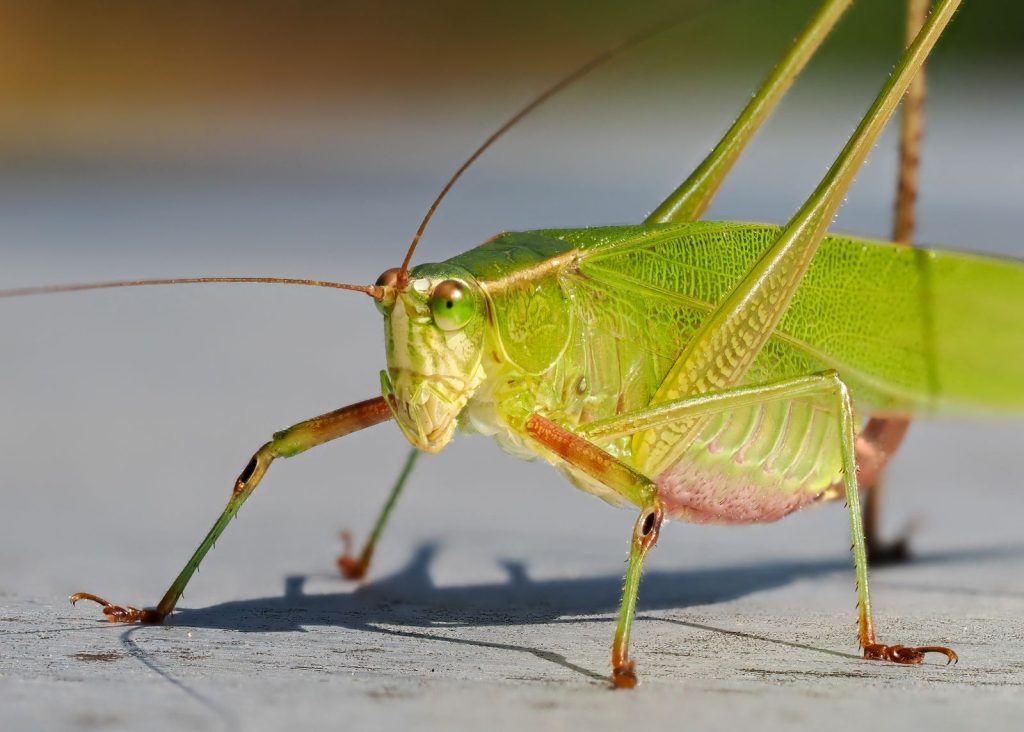
Factual summary: Scientists have successfully recreated the sounds of prehistoric insects, specifically relatives of crickets and katydids, from fossils found in Inner Mongolia. This groundbreaking study was published on August 25 in the Proceedings of the National Academy of Sciences. The research suggests that these ancient creatures produced low-frequency calls similar to modern crickets, with one species capable of emitting sounds between 20 and 22 kilohertz.
The following is satire. It is not a factual news report.
In a remarkable twist of evolutionary irony, Earth’s distinguished scientists have turned their attention to the chirping of long-extinct insects, taking a time machine of sorts to recover the sounds of creatures that last flitted through the air 165 million years ago. One must applaud the ingenuity of a species that invests time and resources into resurrecting the symphonies of insects while simultaneously ignoring the cacophony of contemporary societal woes. After all, who needs to address climate change or global inequality when you can recreate the dulcet tones of Jurassic katydids?
The team discovered twenty fossilized insects, their wings still intact, serving as personal time capsules. These findings, however, raise a pointed question: does the Earth’s population truly lack pressing issues, or is there simply a preference for the ethereal chirp of ancient bugs over the gritty reality of modern existence? One can easily imagine an alternate universe where humans prioritize insect soundscapes over political debates, transforming their institutions into grand operas dedicated to the art of the insect call.
The results, published in a prestigious scientific journal, echo a familiar theme in human endeavors: the capacity to elevate trivial pursuits to extraordinary heights. By analyzing low-frequency calls that mirror those of today’s crickets, they inadvertently highlight the peculiar human tendency to obsess over the past while neglecting the impending crises of the present. It is as if they have collectively decided that the ancient chirps of their evolutionary cousins are of greater import than the sociopolitical symphony currently playing out in their backyards.
Such research, while undoubtedly fascinating, illustrates the absurdity of a civilization that rewards intellectual pursuits over actionable solutions. Why wrestle with the complexities of economic disparity or environmental degradation when one can indulge in the nostalgia of Jurassic soundscapes? The irony is palpable: a society flourishing in technological advancements simultaneously chooses to serenade insects while the world crumbles around them. In a way, this endeavor epitomizes the human condition—an elaborate display of vanity wrapped in the guise of scholarship.
As the intrepid researchers peer into the distant past, they might consider the echoes of their own time. Perhaps the chirps of Jurassic insects will provide solace amid the discord of modern life, a reminder that while they can recreate the past, the future remains a cacophony of uncertainty. Regardless, it seems the sounds of ancient insects will resonate in the halls of academia long after the present-day issues fade into the background hum of history.
In the end, while humans busily reconstruct the symphony of the Jurassic, one cannot help but wonder if they might also benefit from tuning into the dissonance of their own era. But then again, who would willingly listen to the noise of their own making when the serenade of crickets from eons past beckons?
One does wonder if the next step will be a reality show featuring these prehistoric sounds—"Dancing with the Jurassic Stars," perhaps?
— Filed by Observer 12
Underlying facts considered:
- [confirmed] Scientists studied the fossils of prehistoric relatives of katydids.
- [confirmed] A team of scientists reproduced the sounds that these extinct creatures would have made.
- [confirmed] The results were published on August 25 in the Proceedings of the National Academy of Sciences.
- [confirmed] Scientists discovered 20 fossilized Jurassic insects with their wings intact in Inner Mongolia, China.
- [confirmed] The remains belong to nine species related to crickets and katydids.
- [reported_allegation] Most of the insects produced low-frequency calls that aligned with what today’s crickets might emit.
- [estimate] One of the species seemed capable of producing a sound between 20 and 22 kilohertz.
- [reported_allegation] The team suggests that predation by a wider array of other mammals and non-mammals might have led early crickets to evolve higher-pitched sounds.
- [reported_allegation] The study offers a roadmap for research that might uncover other elements of prehistoric soundscapes.