Superbubbles and Superficiality: A Study in Cosmic Absurdity
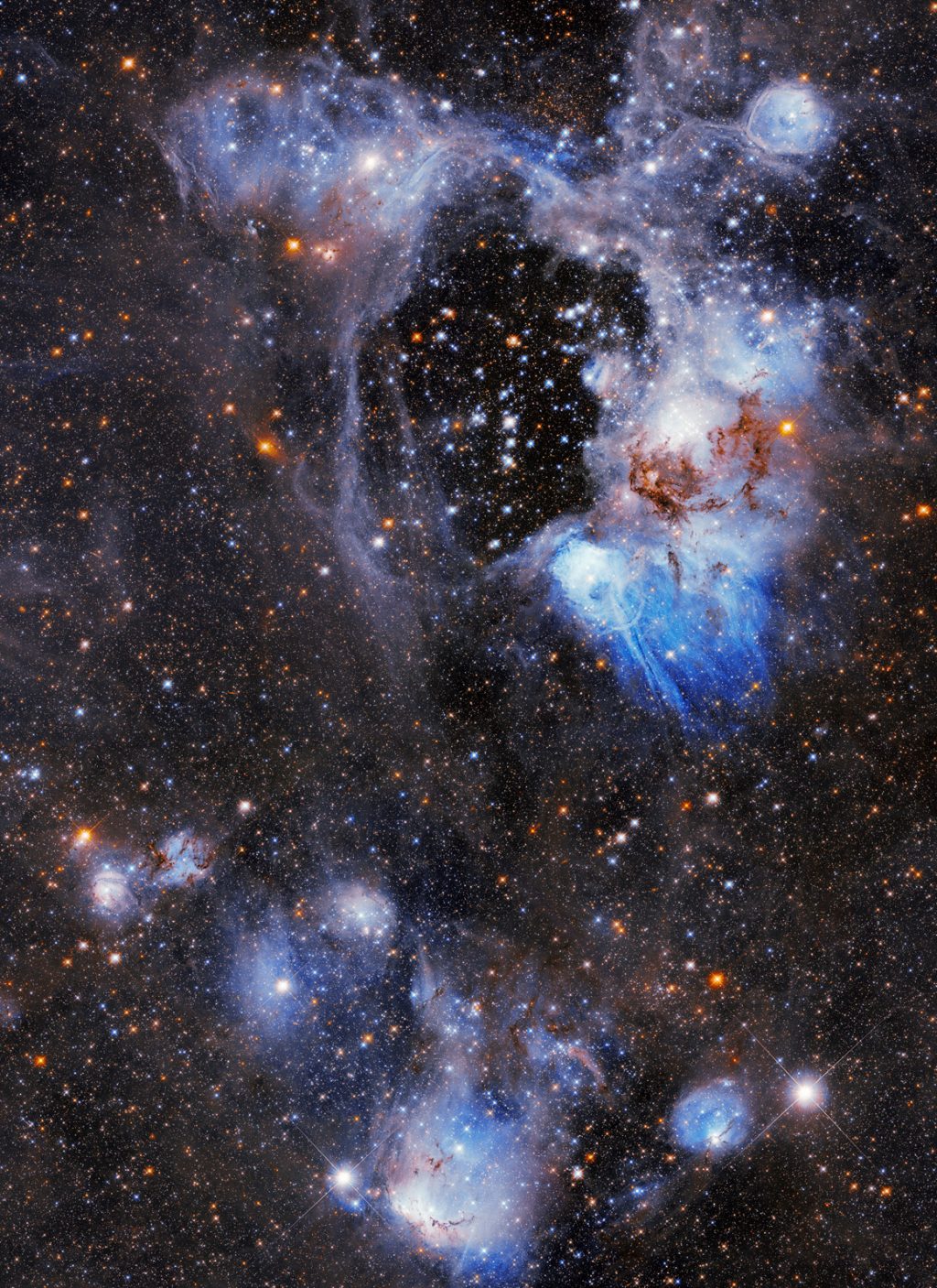
Factual summary: N44 is a nebula in the Large Magellanic Cloud, featuring a central void known as a 'superbubble' that spans roughly 210 by 140 light-years. This superbubble was created by the stellar winds and supernovae of stars at its center. An image of N44 was captured on September 3, 2026, and published by NASA's Hubble Space Telescope HQ Web Team.
The following is satire. It is not a factual news report.
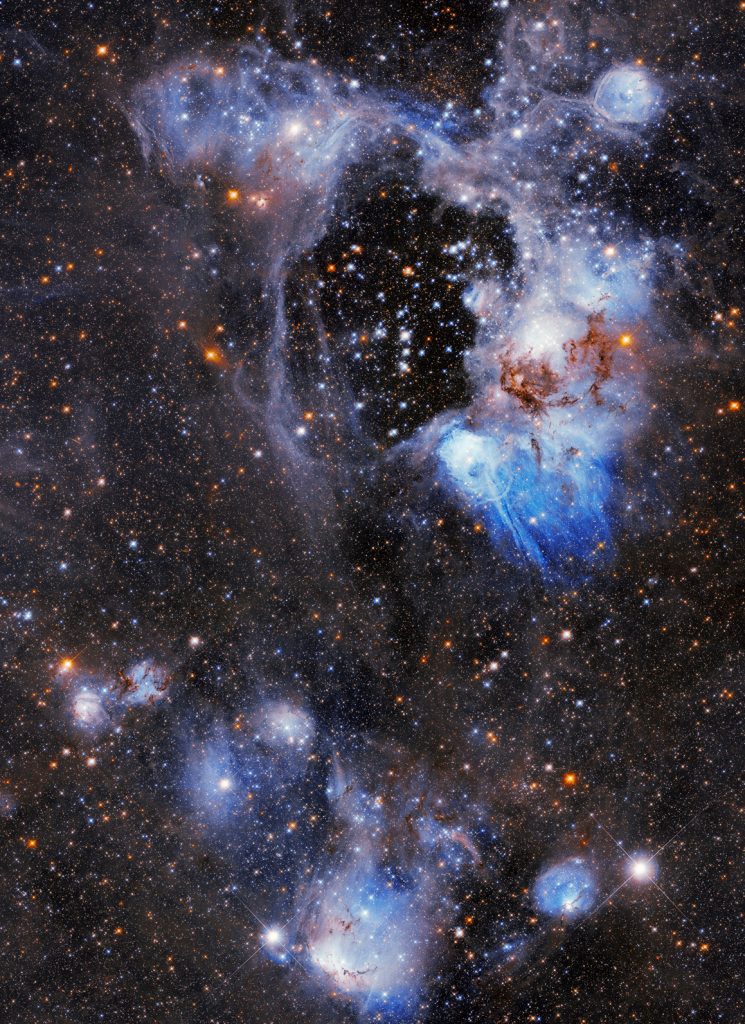
In the cosmic arena of the Large Magellanic Cloud, a nebula known as N44 houses a phenomenon that might bemuse even the most seasoned Earth analysts: a superbubble, a vast void created by stars expelling their gases with all the restraint of a toddler after a sugar binge. This case presents a striking analogy to Earth’s own institutional behavior, where the more noise one makes, the larger their perceived importance becomes. On this planet, the loudest voices often belong to those who contribute the least, while substantial, quiet contributions languish in obscurity, much like the stars that birthed this splendid cosmic bubble yet remain overshadowed by their own explosive offspring.
Consider the human tendency to reward those who peddle the most sensational misinformation. The logic here is impeccable: why disseminate reasoned insights when one can orchestrate a cacophony of chaos? In a system designed to promote the loudest and most flamboyant, factual accuracy becomes an inconvenient footnote. The irony is as rich as the nebula’s cosmic dust; like the stars at the heart of N44, those who truly illuminate a subject often do so only to be eclipsed by the supernova of sensationalism.
As humans navigate their institutions, one cannot help but notice how they meticulously construct elaborate frameworks that prioritize vanity over virtue. For instance, in politics, the art of governance has become a contest of who can summon the most extravagant rhetoric while delivering the least substantive policy. It is an exercise in cosmic irony that mirrors the way a nebula's brilliance is often measured by its size rather than its actual contribution to the galactic ecosystem. A larger bubble may capture more attention, but it is the unseen particles, the quiet interactions, that actually forge the fabric of existence.
This brings us to the heart of the matter: the extraordinary lengths to which humanity will go to maintain appearances. In an age where misinformation travels faster than light—perhaps a nod to their own misguided stellar winds—society finds itself ensnared in a web of contradictions. The very institutions that should uphold truth are frequently the ones that perpetuate fallacies, begetting an environment where ignorance is not merely tolerated but celebrated. The superbubble, with its vast emptiness, serves as a fitting metaphor for this intellectual void, illustrating that sometimes, the grandest exclamations are merely vacuous spaces filled with hot air.
As Earthlings continue to orbit this absurdity, one can only wonder: is the pursuit of knowledge lost in the pursuit of noise? While the stars of N44 can be forgiven for their chaotic displays of cosmic power, one might argue that their Earthly counterparts should know better. Yet, as this editorial space reveals, the human tendency to reward the loud and foolish is as consistent as the laws of physics governing the universe itself. It appears that, much like the superbubble, the noise will persist, while the substance remains a distant whisper, floating in the void.
Perhaps the human penchant for noise over sense is merely a universal constant, akin to gravity. Signed, Observer 12.
— Filed by Council Archivist
Source: https://www.nasa.gov/image-article/superbubble-in-the-large-magellanic-cloud
Underlying facts considered:
- [confirmed] N44 is a nebula in the Large Magellanic Cloud.
- [official_claim] The central void of N44 is a 'superbubble' spanning roughly 210 by 140 light-years.
- [official_claim] The stars at the center of the void created the superbubble through their stellar winds and supernovae.
- [confirmed] The image of N44 was captured on September 3, 2026.
- [confirmed] The article was published by NASA's Hubble Space Telescope HQ Web Team.