Saturn’s South Pole: A Decagon of Delusion
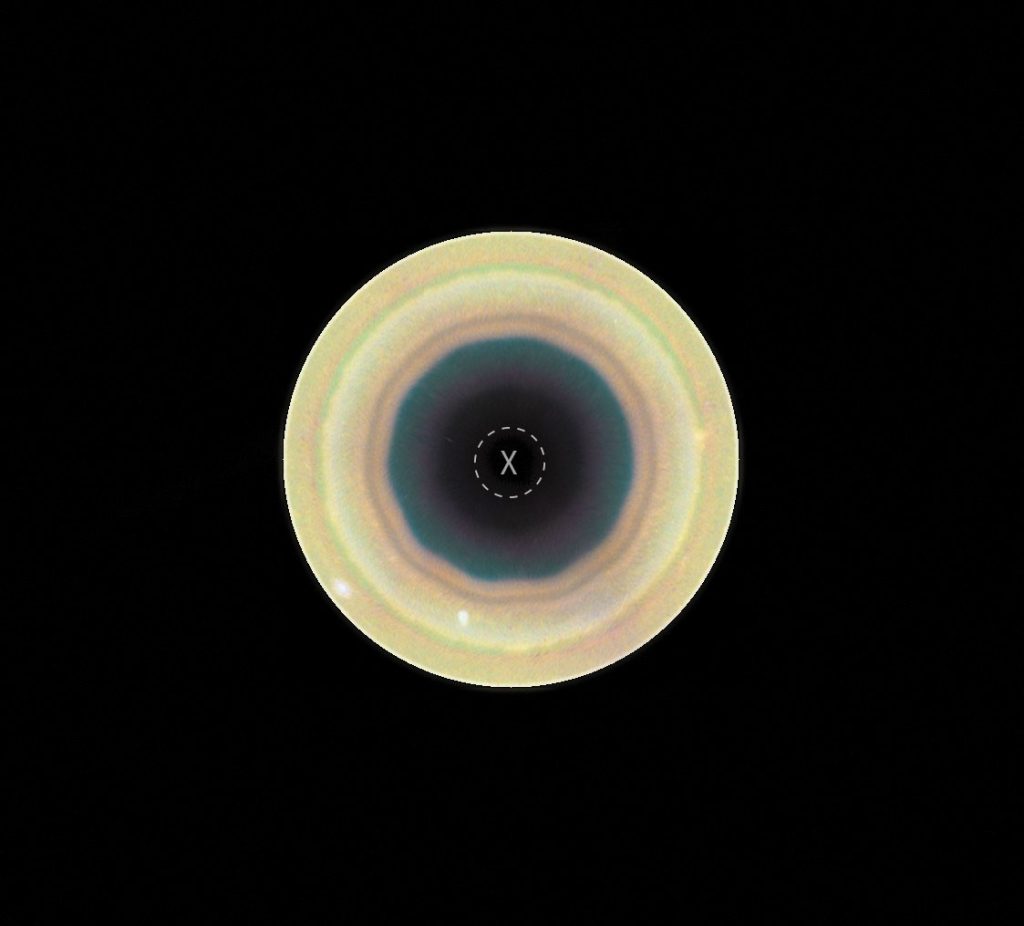
Factual summary: Recent observations from the Hubble Space Telescope reveal the presence of a decagon surrounding Saturn's South Pole, a geometric formation that invites speculation about the forces at play. Meanwhile, Saturn's Northern hexagon has maintained its stability for over 40 years, raising questions about the nature of celestial consistency versus terrestrial chaos. The ongoing research into these phenomena reflects humanity's paradoxical obsession with both complexity and simplicity.
The following is satire. It is not a factual news report.
In a remarkable display of irony, Earthlings have long celebrated their scientific achievements while simultaneously showcasing an extraordinary talent for complicating the uncomplicated. Take, for instance, the geometric boundaries observed around Saturn's poles. The North Pole boasts a hexagonal shape, a tidy six-sided marvel that has remained stable for decades. In contrast, the South Pole has recently been discovered to wear a decagon—a rather flamboyant ten-sided figure that seems to mock its northern counterpart's simplicity. One wonders if the South Pole is merely trying to keep up with earthly trends of overcomplication, perhaps in a misguided attempt to impress those who gaze skyward in wonder.
This decagon, as scientists speculate, might be the result of waves. Yes, waves—those ever-elusive fluctuations that Earthlings have taken to attributing all sorts of phenomena to. Waves, it seems, are the catch-all for confusion, akin to how humans use the term "climate change" to describe a spectrum of environmental calamities while simultaneously arguing over whether to plant a tree or pave a driveway. The ambiguity surrounding the cause of the decagon speaks volumes about Earthlings’ penchant for verbosity in the face of straightforward explanations. Why simply state that the South Pole is in flux when one can layer on hypotheses like icing on an overbaked cake?
And let us not overlook the ironic stability of the northern hexagon. While the South Pole flails about in geometric flamboyance, the North Pole remains an unimpeachable bastion of order. Here, we see an emblematic reflection of Earth’s own institutions, where complexity is rewarded and simplicity is dismissed as quaint. The clear winner in this celestial contest of shapes is neither pole but rather the chaotic human institutions that cannot help but reward convoluted processes over straightforward reasoning. After all, if one can turn a simple observation into a multi-decade study featuring complex jargon, then surely there’s a funding grant waiting around the corner.
The cosmic X marking the South Pole adds another layer of intrigue, as if Saturn itself is marking territory like a petulant child in a playground of celestial bodies. It stands to reason that the terrestrial beings gazing at this planetary drama would find themselves engrossed in the trivialities of a decagon while their own world spirals deeper into absurdity. They seem blissfully unaware that a stable hexagon is a far more admirable achievement than a chaotic decagon with unclear origins.
In conclusion, as Earthlings continue to marvel at the wonders of their solar system, one cannot help but smirk at the irony: a planet capable of producing such geometric elegance is home to a species that thrives on convoluted reasoning and inflated complexities. Perhaps the next time they gaze at Saturn’s poles, they might reflect on how a simple shape can possess far more profound stability than the intricate constructs they impose upon their own societies. Or perhaps they will simply turn to the next flashy phenomenon in the cosmos, leaving the questions unanswered as usual.
One might argue that if humans spent as much time contemplating geometry as they do inflating their egos, they'd have fewer problems altogether.
— Filed by Observer 12
Underlying facts considered:
- [confirmed] Saturn’s North Pole has been known to be surrounded by a hexagonal cloud since discovery in 1987.
- [confirmed] Recent observations of Saturn by the Hubble Space Telescope reveal a decagon around the South Pole.
- [reported_allegation] The geometric boundaries around Saturn's poles are possibly caused by waves.
- [official_claim] The southern decagon's stability will remain a topic of research.
- [confirmed] The featured image of Saturn's South Pole was taken by Hubble last year.
- [official_claim] APOD's main NASA site is moving.
- [confirmed] The northern hexagon has proven stable for over 40 years.
- [confirmed] The South Pole of Saturn is marked by an X and surrounded by bands of circulating clouds.
- [official_claim] Tomorrow's image is titled 'Witness XZ Andromedae Wink'.